
Who is Data For?
The Graphic Novel New Masters is enveloped in political tension tied to planetary resources and the price of data and technology. What does this say about us?

This is the Eye of Ọ̀rùnmìlá.
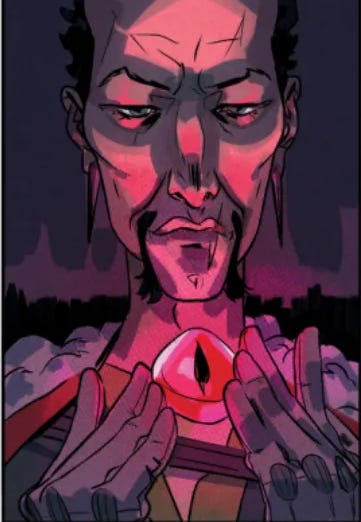
It’s an encrypted data archive from an ancient-but-advanced civilization. A smuggler named Martouf—who is pictured above—“found” the eye in unclaimed territory. Since then, he has been decrypting and selling parts of the data to the highest bidder.
The Eye is the subject of focus in Shobo and Shof Coker’s graphic novel New Masters. The graphic novel—written by Shobo and illustrated by Shof—tells us a story in six issues about the alien colonization of Earth, Earth’s role in intergalactic relations, and most primarily the price of a large store of data. The story focuses mostly on half-alien half-”Earther”—the alien race in question are called Jovians—Funlola Reis, and her family: her mom Sulesh, her dad Persio and her uncle Denarii.
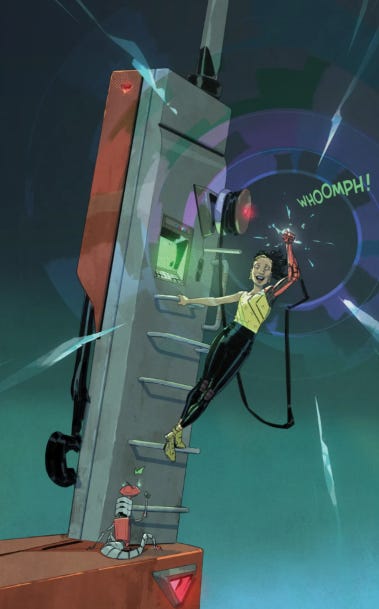
The story is, to some degree, about the power that this data bestows on the one who possesses it. So, when Martouf, a smuggler, decides to sell the Eye to the highest bidder, there are simultaneous heists planned to steal the eye from the auction house. Funlola’s mom Sulesh is the lead of one of these groups, accompanied by Periso, Denarii, and another. The resulting story plays out much like a heist story would, but it is Funlola who secures the eye and its data, inside her prosthetic arm.
Data is the new gold or the new oil or the new… well you get it. I’ve seen it a number of times over the years. Most recently in this Mathew McConaughey ad in which he quips, “if AI is the wild west, does that make data the new gold?” This supposed fact about data being gold got me thinking about the Californian Gold Rush.
In a mostly-defunct project that I called Public Interest Energy, I wrote about the Gold Rush and compared it to the anticipated Lithium Rush that’s supposed to happen in a region near my hometown.

So, when anybody compares a development in technology to the gold rush, I think about the harms caused to various groups of people. Economic prosperity comes at a cost, and often those costs are swept under the rug as the more important task is the development of the abstract economy than the lives of further abstracted people.
New Masters forces me to think about the techno-cultural reality of data. The data that’s stored in the Eye is obviously technical, it derives from some process of extrapolating information and storing it in 1s and 0s. Through this manner of storage, other technological products can now interact with this data as relevant. The data in the Eye is deeply cultural. A people ancient to the land currently inhabited by Funlola’s people, lived in harmony with an alien race. Through this symbiotic relationship, both people experienced a kind of techno-cultural advancement that has not been seen since. This data is deeply cultural. I’m not the only one making this claim about data either, when a business makes the claim in their mission statement “when data is culture, data is power” they are saying the same thing. Or here’s an article from a Ben Proctor who writes in Data Orchard:
The same dataset will be interrogated in different ways by different people based on their lived experiences, their interests and their culture.
Different people would capture data about different aspects of the same environment based on these same issues. The act of capturing data and creating datasets carries with it the influence of our culture.
This is not bad. What would be bad would be to ignore this fact, to assume that data is in some way culturally neutral.
The more diversity we can bring to data, to the design of datasets, to the collection and analysis of data and to the application of insights the better.
We can see from New Masters itself the history of how the data in the came to be:
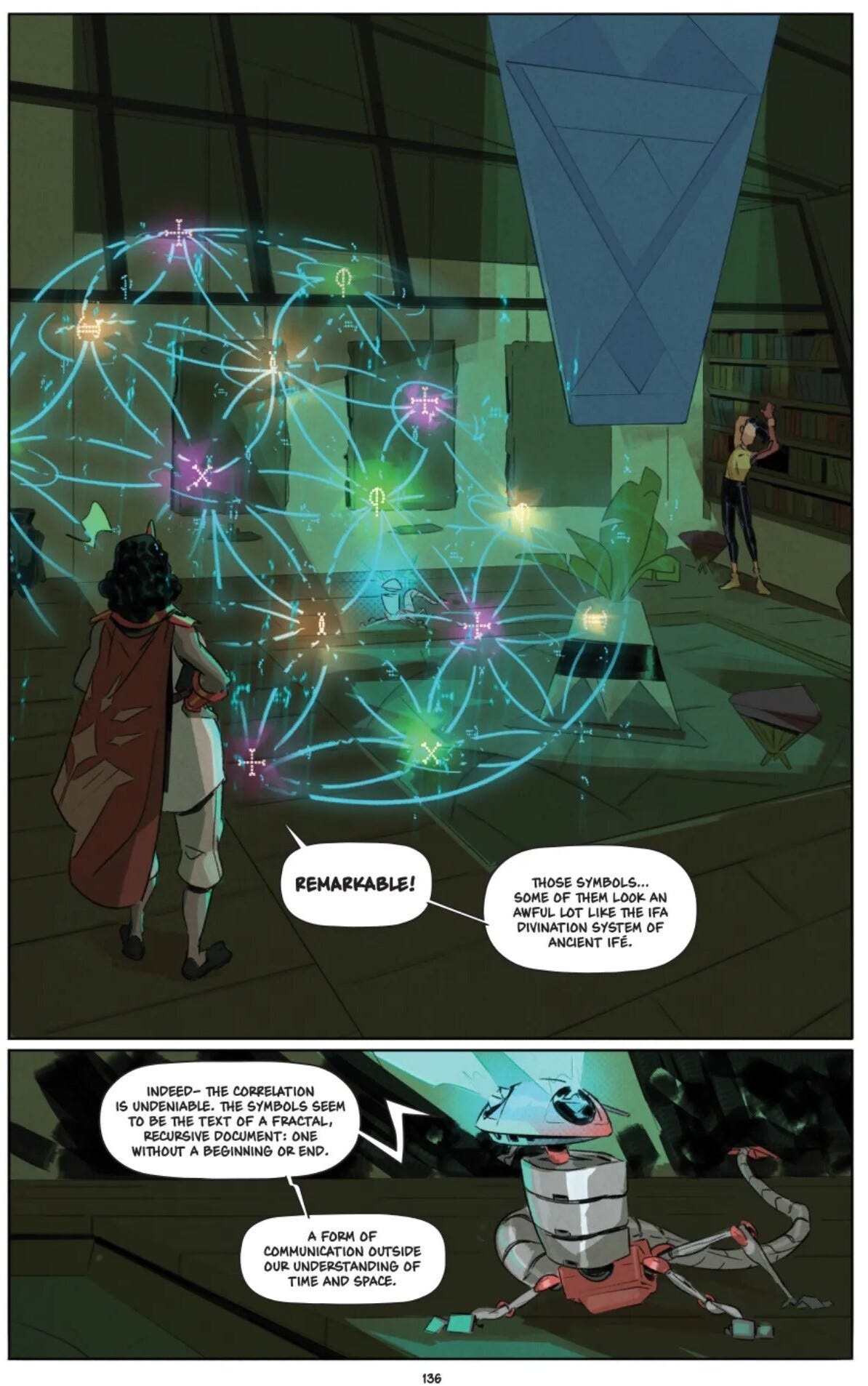
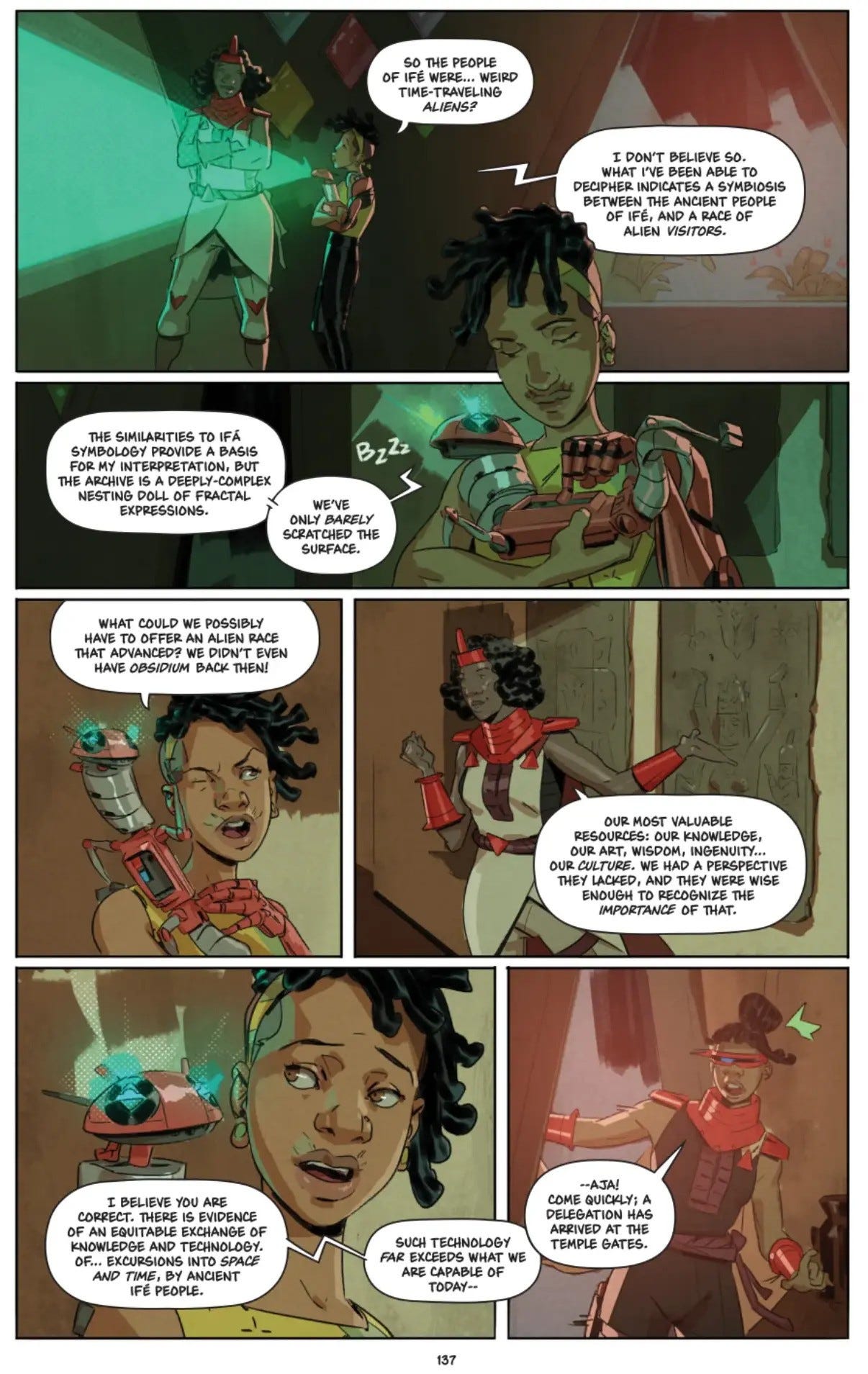
The structure of the data reflects the divination system of the Ife people, a lost city that grew to prominence because of its access to a resource called Obsidium. So, we learn in the above panels that the Ife cohabited with “a race of alien visitors”.
Data is valuable. Entire technology empires stand because of the data that we willingly or unwilling share with them in using their applications. It would be one thing to say, for example, that YouTube knows that I like long form content about social commentary. It’s another thing to know how this data gets accumulated. My YouTube history coupled with my Google search history is a powerful combination of data that already exists somewhere out there because YouTube and Google are owned by the same company. For now, the purpose of this data is to get closer and closer to approximating me so that they can predict my interests in finer and finer cross-sections, all in an effort to get me to buy things.
This data does not exist in a vacuum. It communicates cultural knowledge. What might it mean that 30-somethings who have progressive politics like to watch YouTube videos about people deeply engaged in social commentary? It’s a socio-cultural question that this “theoretical” data could answer. My point is, despite the currently reality of data being used to get us all to buy more, there are other ways this data could be, and has been used. This is what I mean by techno-cultural data.
A key question that New Masters asks is “to whom does data belong?” The Eye for much of the graphic novel belongs to Martouf the smuggler, but possession of that data became too dangerous, even for a danger-seeking smuggler. Selling the Eye of to the one who bid the most, is a natural way to rid oneself of something valuable and stolen, and so Martouf’s actions here make sense. Rather than buy this data however, we have two major groups rallying to steal the data. These groups are represented by planetary-political interests: Dr. Gideon Ojumah, a powerful/rich man of means whose interests lies with the Jovians, and Governor Tosin Ojumah whose interests lie with improving the conditions of earth. Yes, they are father and daughter, a wealthy family torn apart due to conflicting ends.
It is worth spending a moment to understand what’s driving this rift. Governor Ojumah sees what people have to do to get by in this world. Much like Funlola in the opening sequence of the story, people are going through significant lengths and at risk of great personal harm such as diving as deep as almost 250 meters, to find and sell Obsidium.
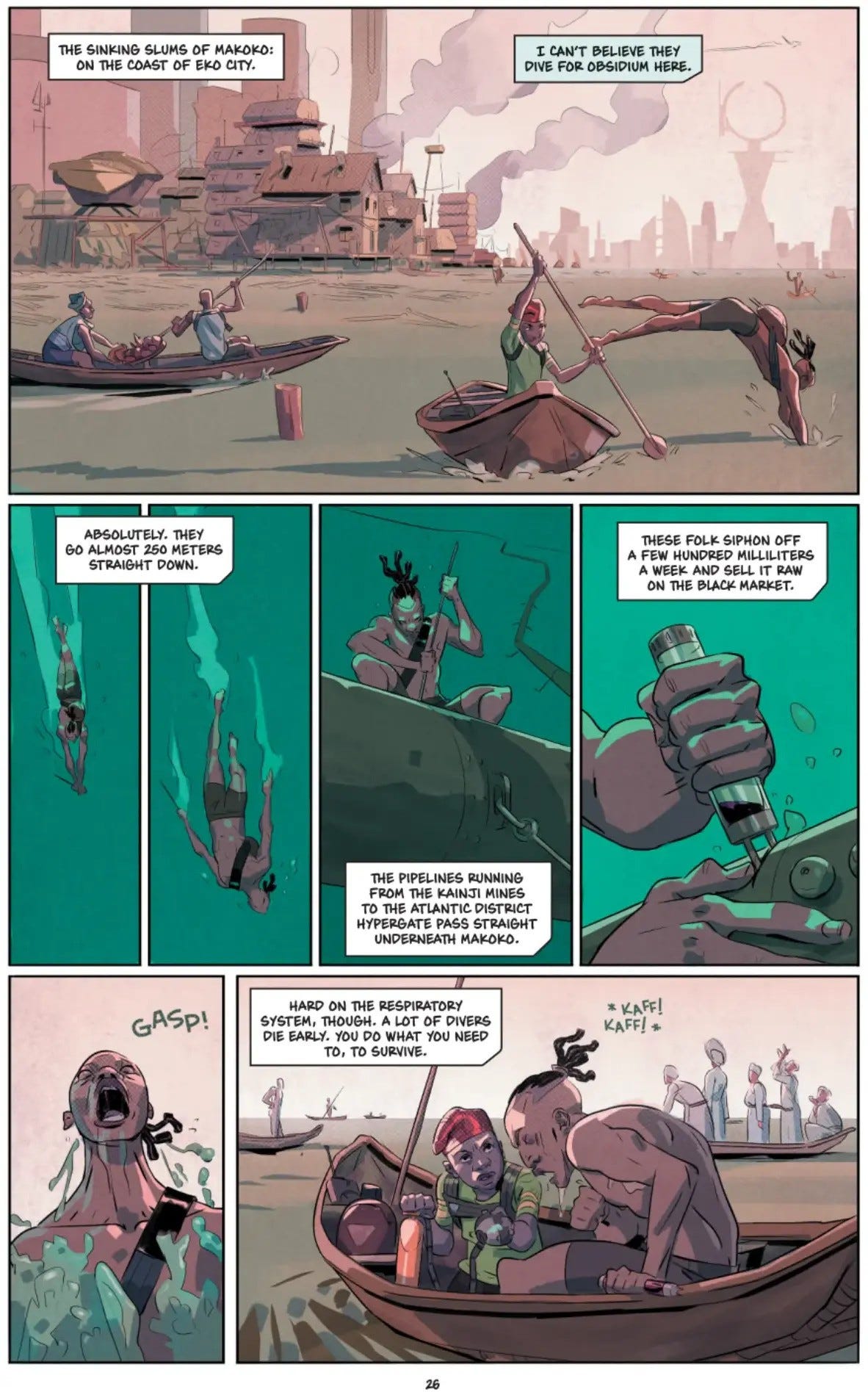
We also open the first part of the graphic novel with Funlola scavenging for Obsidium reserves in the city’s exclusion zone. Wildlife has taken over the area leaving it hostile for those who go there. Funlola’s goal is to bring in more money for her family so that they all might one day enjoy a better life on Jupiter.
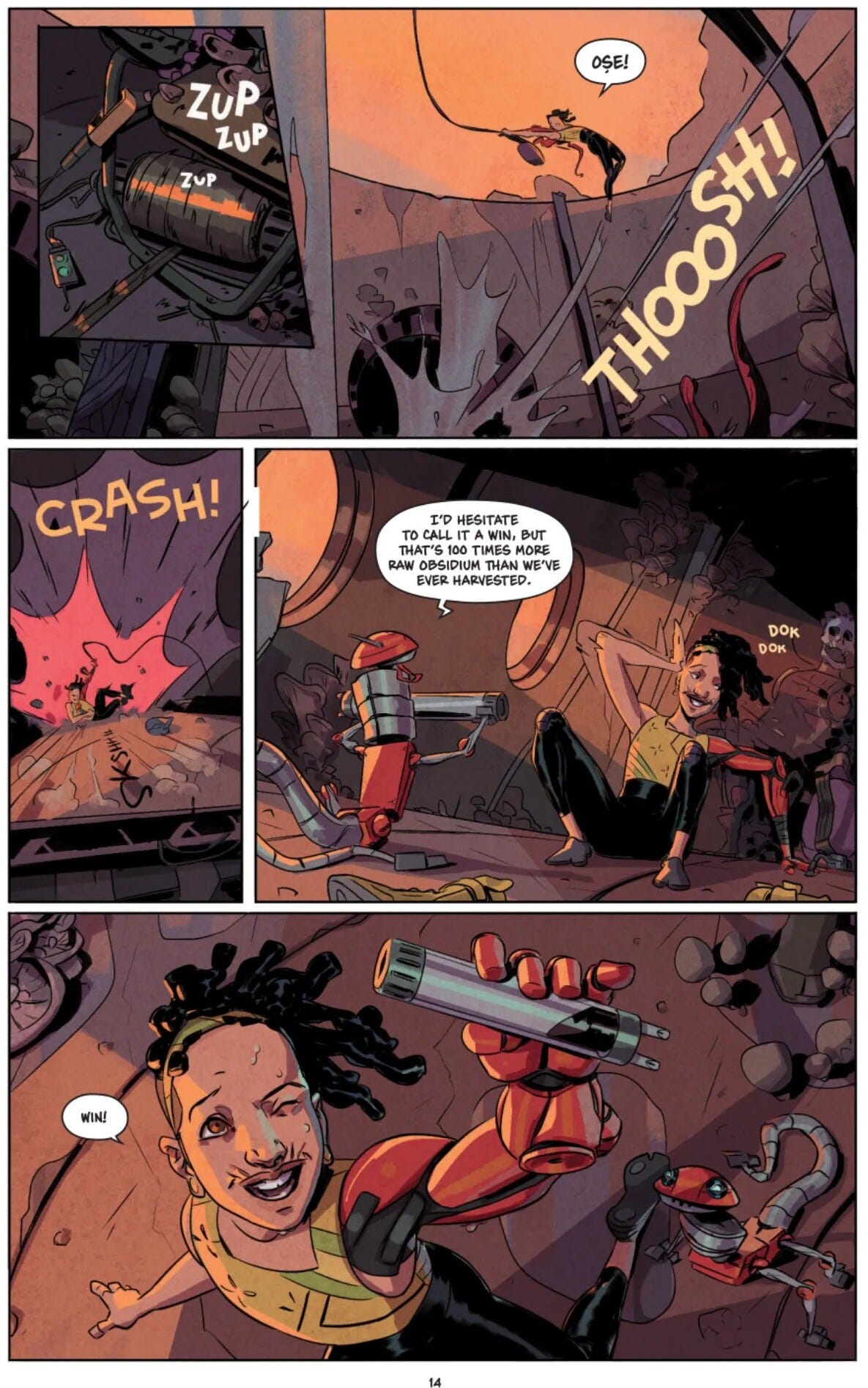
Obsidium is the resource that keeps Earth relevant in this planetary-political context. Without it, the sentiment feels, Earth is a backwater. According to Cecily Sommers, the founder of The Push Institute, a trend analysis and consulting non-profit, change is dictated by four major forces: governance, demographics, technology, and resources. These forces are in order of fastest moving to slowest moving making resource the slowest moving as they are “affected by gradual processes—such as evolution, mineral formation, climate change, tectonic shifts—and by human activity.” This comes from Cecily Sommer's book Think Like a Futurist. Thinking about Obsidium, it is only through this resource that Earth remains relevant. Because other planetary groups can’t produce it, they must rely on the Earth’s supply.
Here lies the rift between Dr. Gideon Ojumah and Governor Tosin Ojumah. Tosin, as she is called by her partner, desires a better situation for Earth, but Obsidium as a resource cannot provide Earth this prosperity. And under the colonialist conditions brough about by the Jovians, resources are actively being siphoned away from Earth. Dr. Gideon Ojumah is on the side of monetary profit. It does not make sense to fund a backwater, even if it’s his own home planet, when the Jovians are the far superior people.
So, from the perspective of the reader, the question of “who should have possession of the Eye” becomes more a question of “who do we want to have much more power”? The choices are to centralize the power with a governmental elite or her father, until Funlola and her uncle make off with the data. It is only until her involvement, her hesitancy on who to give the Eye to, that we see that there may be another option. And we do get another option, one that Funlola choses for her self, to disseminate the data across the broadcast system so that everyone would have access to it.
Data was to be for the people. And I think that the data we produce on all of these social media sites and the like should equally be for the people. The fact that such rich data rests often in the hands of an untouchable elite corporate class is contrary to the ideals of democracy.
This freeing of data however, requires frameworks of collection, storage, and access that I’m not sure exist at scale. The infrastructure alone, the ownership and the function, presents a rich set of socio-technical challenges that perhaps outside of academia, have yet to be addressed.
Let’s free our data, but then there’s a lot of work to do.